
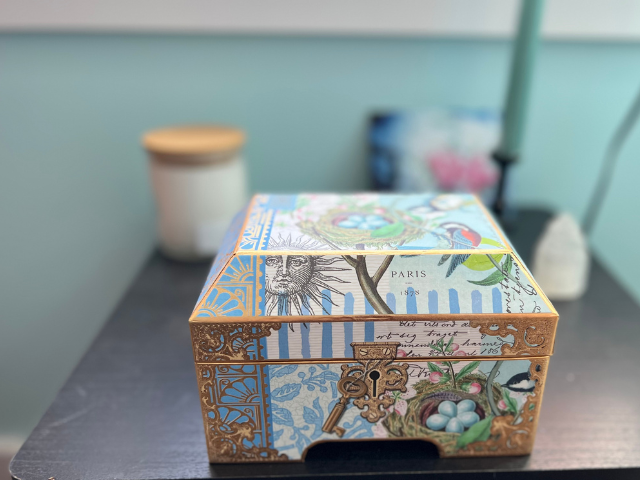
Every October, I think about cancer.
I found the first lump in my breast at fifteen. Fortunately, it was just a cyst. Doctors taught me the difference between scary lumps and ones that weren’t a big deal. Then life went on.
In 2016, I discovered something in the worrisome category, which led to a 3-D mammogram and an appointment with a breast surgery specialist. This time, I had a fatty tissue deposit. Case closed. Still, she made me one of her patients.
After last year’s mammogram, Dr. Sommers scheduled an MRI at the six-month mark. A false positive on that test landed me back in her office, but, at the time, she brushed it off.
I recently met with Dr. Sommers for the last time. As we celebrated her upcoming retirement, she emphasized the importance of my monthly self-exams, then told me about the “category three area of concern” in last year’s MRI, which suggested I needed another one six months from now. Damn.
For eight years, I’ve lived with this uncertainty that, like the wind, sometimes whispers and sometimes howls.
Trauma survivors hate uncertainty—and for good reason. For most of us, uncertainty has meant chaos, fear, pain, and disappointment. Our brains fend it off by catching whiffs of concern in the present so we can quickly snuff out future problems. Some of us have an almost preternatural ability to read emotions and predict the future. Others put the smackdown on ambiguity by controlling their inner and outer worlds. These skills have served us well.
But sometimes uncertainty is our friend.
In When Things Fall Apart, Pema Chödrön writes, “As human beings, not only do we seek resolution, but we also feel that we deserve resolution. However, not only do we not deserve resolution, we deserve something better than that. We deserve our birthright, which is the middle way, an open state of mind that can relax with the paradox and ambiguity.”
She’s suggesting that the unknown can be good. It can take us to surprising places, whether that’s a story ending we couldn’t have predicted or an outcome beyond our capacity to imagine. But how do you find that middle way if you’ve avoided uncertainty by squashing or ignoring it?
I want to tell you that I can swim in the waters of uncertainty without a care in the world, but I can’t. Early childhood experiences wired my brain into near-constant hypervigilance, and while that’s healing, rewiring the brain is a slow process.
Instead, I’d like to share the strategies I use to live with uncertainty even when I don’t like it.
I don’t embrace uncertainty all at once. I give myself permission to plan, plot, and be proactive. This includes playing the worst-case scenario game, just like Randall and Beth did in the sitcom, This Is Us.
I used to imagine the future I wanted in technicolor. While I still do this, I now imagine the feeling I want to have rather than the steps I need to take to reach the finish line. Focusing on the feelings opens me to the many paths that lead to my desired outcome.
Once I’ve identified the feeling I want to associate with my goal, I write a letter to Future Me as if I’ve already achieved it. Writing and scheduling it makes the goal real and holds me accountable to it. It also heightens my awareness of the potential opportunities I encounter as I take the steps I already know.
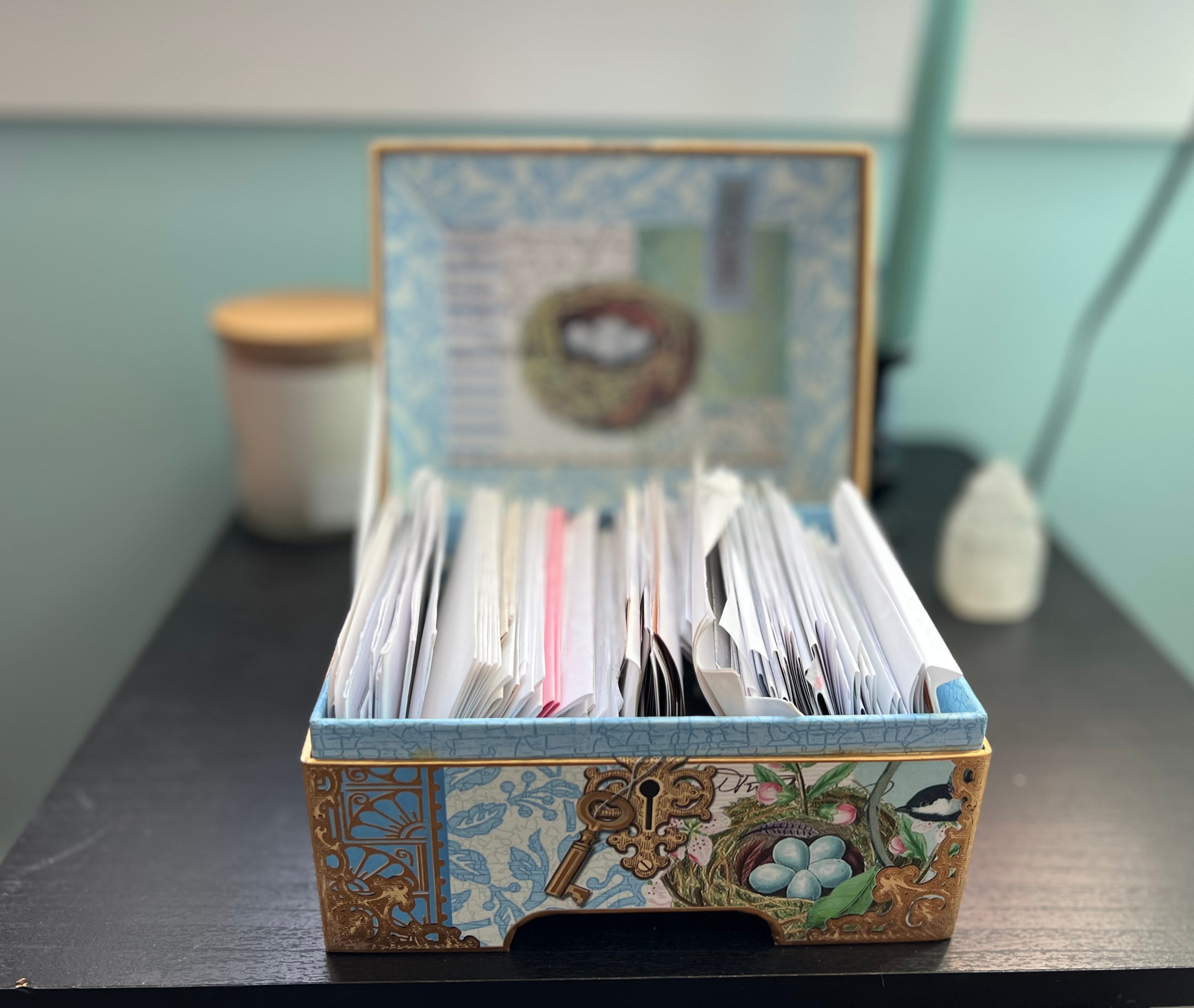
To embrace uncertainty is to dive into the ocean, have faith that land exists even when you can’t see it, and continue swimming until you do. Fatigue, doubt, and fear are the waves you will encounter. They’re proof that you’re swimming in the unknown. When I feel lost or tired, I write my worries on a slip of paper and add them to my “God box” (a.k.a. my box of empirical evidence that things work out). While you can attach a spiritual practice to this—and I do—it’s not magic. Writing down your worries separates you from them. Reviewing them months or years later can give you confidence that while you might not have gotten what you wanted, you always got what you needed—and sometimes, that’s way better. Reflecting on them can remind you of the lessons you learned.
I have gratitude for what’s going well. Life is good today. I am safe. I am loved. My needs are met. I get to do amazing things, like write this newsletter and work with my clients. Tomorrow, I’ll teach Mastering the Trauma Scene to Improve Your Memoir. I hope to see some of you there.
Until next time, let’s build some collective wisdom on this subject. Let me know how you deal with uncertainty and which of the above strategies speaks to you. I’m eager to hear your thoughts on this subject. Plus, you never know who your comment might help.
Love what you just read?
Get my weekly posts delivered to your inbox. As a special bonus, I’ll send you a FREE copy of my ebook, Write More, Fret Less: The Toolkit for Gaslight Proofing Your Writing Life.
Need a little nudge? See what my followers have to say.
I get something from every single newsletter I receive.

I have a short list of newsletters I regularly read. Lisa’s is one of them. I read every single one.

Your newsletters offer excellent reminders to check in with myself and understand my needs as a writer.
