

Twelve years ago, I started a birthday tradition: do something new each year. Over time, that’s included magical moments like hiking inside a volcano in Hawaii and even hosting my own birthday party.
This year, I kept it simple. I wrote the names of nearby cities on slips of paper and dropped them into a mason jar. As I stirred them, I prayed: Let me choose one for my highest good. I pulled out Cape Charles.
I’d heard great things about this coastal Virginia town, so expectations were high. But what happened next wasn’t just a birthday surprise—it became a masterclass in juxtaposition in writing, a powerful literary device for memoirists.
What is Juxtaposition in Writing?
Juxtaposition is the art of pairing two seemingly unrelated events side by side to deepen meaning, shift tone, or alter a reader’s emotional experience. It’s one of seven literary devices you can use to manage time and your reader’s experience of your story.
When you juxtapose two events with opposing tones, you let readers catch their breath. Take this example: Amy Lin uses joyful memories of her husband as a reprieve from her excruciating grief after his untimely death in Here After.
In my story, I could juxtapose my excitement for this trip with the immense sorrow I once felt around childhood birthdays. If I start with the sorrow, the trip becomes a breath of fresh air. If I begin with the trip, then weave in a painful birthday flashback, the emotional stakes grow—because now the trip has something to redeem.
Using Juxtaposition to Intensify or Relieve
Pairing events with similar tones can intensify your story. For example, if I share a story about failing a multiplication test in third grade, you might feel sad for the narrator. But I can amplify the devastation by sharing multiple back-to-back failures. Suzette Mullen accomplishes this in her memoir The Only Way Through Is Out by stringing together illness, rejection, and doubt to create a visceral, unrelenting emotional journey in her book’s Dark Night of the Soul section.
Even light stories benefit from this technique. Pairing my epic volcano hike with experiencing a solar eclipse makes a simple road trip to a sleepy town feel less impressive.
Here’s the real magic of juxtaposition: it leads to new insights and a super story that combines both experiences. My favorite memoir example is The Fact of the Body, a true crime narrative that braids Alex’s personal experience with incest with Ricky Langley’s brutal murder of five-year-old Jeremy Guillory.
Each story is gripping on its own. Together, they create a nuanced exploration of truth and justice that leaves readers with more questions than answers. Hell, I’m still pondering some of them.
Juxtaposing Disaster with Discovery
During the week leading up to our departure, we researched local restaurants, confident the gluten-free options we couldn’t see would materialize. Our anticipation grew as we approached Cape Charles.
We had talked about moving to a beach town for years, with Virginia Beach high on our list. I’d experienced a spiritual awakening there while swimming near a pod of dolphins back in 2006, four months after my divorce. Each time we’ve visited, we’ve talked about moving there but always chicken out, citing some imperfection.
Over the years, we’d visited other beach towns, but none had met our expectations. We wondered if maybe Cape Charles had what we were looking for.
When we arrived, our enthusiasm faded fast. The beach bordered a construction site. The coffee? Overpriced and forgettable. Most of the shops were closed. The only gluten-free options at the open restaurants were salads.
My husband looked around and said, “Let’s not General Butler State Park this.”
Our one and only camping trip to General Butler State Park occurred early in our relationship. It was a total disaster. Upon arrival, we discovered our assigned spot was a concrete pad meant for an RV, not the tent we’d packed. When we asked for something else, the rangers suggested we try the “rustic camping area,” a poison-oak-filled field half a mile from the nearest bathroom. The beach was next to a scum-laced pond, and the chlorine wafting from the pool burned our eyes. Through it all, we both smiled and insisted everything was fine, certain the other was having a good time.
Standing near the pool fence, we finally admitted how miserable we were.
Not wanting to “General Butler State Park” my birthday, we cashed in a hotel reward and headed to Virginia Beach. That night, we dined on Puerto Rican food and strolled the boardwalk.
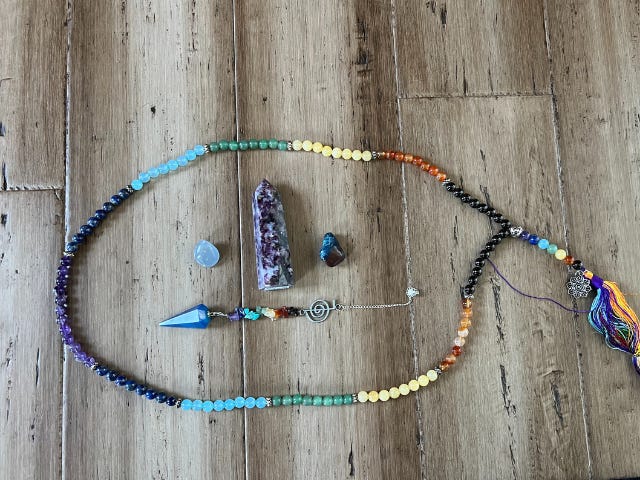
The next day, we visited Edgar Cayce’s A.R.E., where I left with crystals, a beautiful strand of mala beads, and something more—clarity about why Virginia Beach is The One.
This clarity wouldn’t have been possible without first choosing sleepy, closed-down Cape Charles. Talk about birthday magic!
That’s also the magic of juxtaposition. It creates meaning through contrast you can’t achieve with another arrangement of your content.
Why Memoir Writers Need Juxtaposition
Whether you’re writing about grief and joy, fear and freedom, or even birthdays gone wrong and revelations gone right, juxtaposition in memoir helps you:
- Manage emotional pacing
- Control tone shifts
- Create deeper reader insight
- Raise narrative stakes
- Layer personal transformation
If you want to learn more, join me this Wednesday (tomorrow, April 16th) for Managing the Present in Memoir, where we’ll explore seven literary devices—including juxtaposition—to elevate your storytelling.
Using them allows you to appreciate the power of every moment, enriching both your life and your memories.
And that, my friends, is why I will always—always—write on.
Warmly,
Lisa
Love what you just read?
Get my weekly posts delivered to your inbox. As a special bonus, I’ll send you a FREE copy of my ebook, Write More, Fret Less: The Toolkit for Gaslight Proofing Your Writing Life.
Need a little nudge? See what my followers have to say.
I get something from every single newsletter I receive.

I have a short list of newsletters I regularly read. Lisa’s is one of them. I read every single one.

Your newsletters offer excellent reminders to check in with myself and understand my needs as a writer.
